
THE COMPOUND or, “Homesteaders”
by Ripley Mandanis
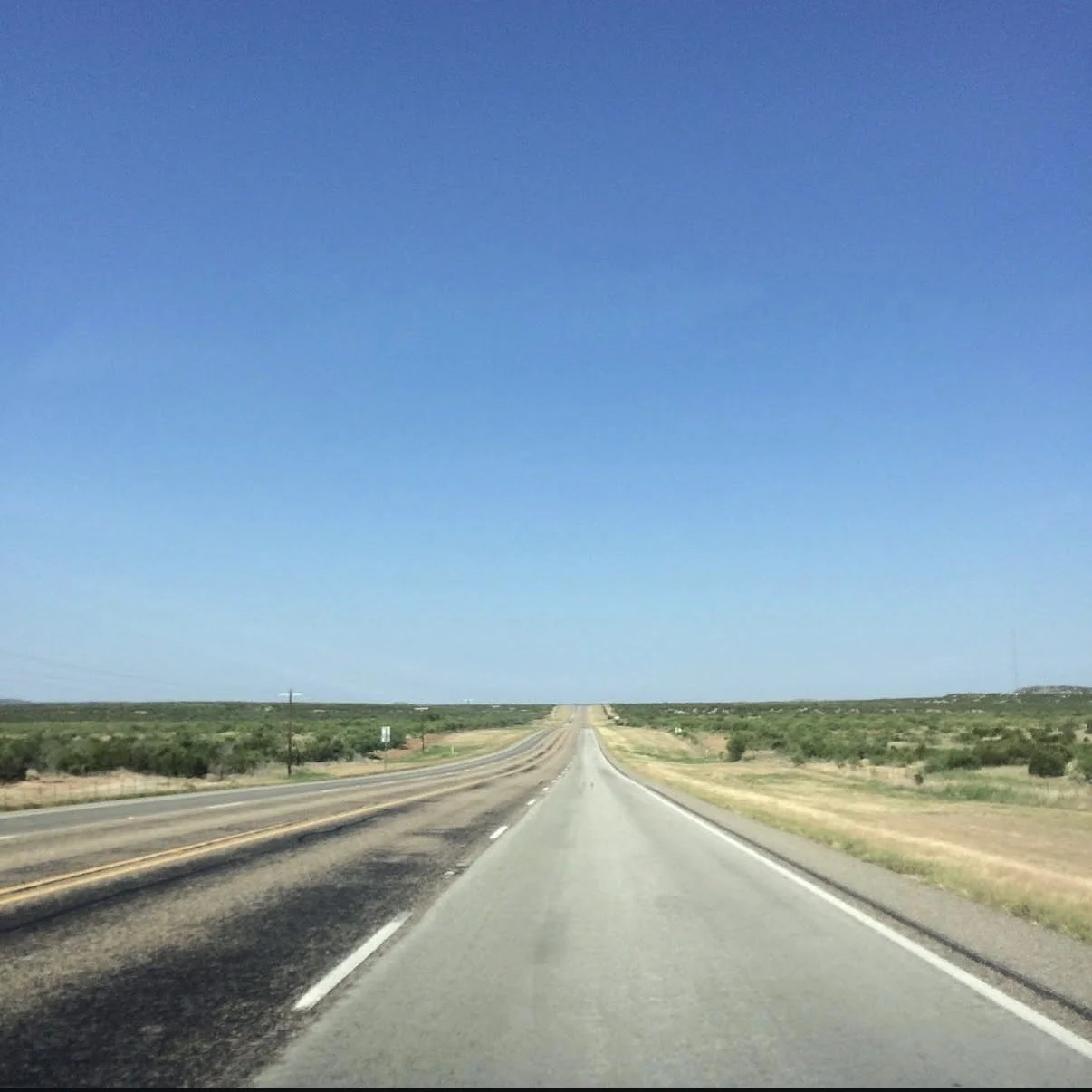
The sun was right at the center of the sky when I got off the plane at Austin-Bergstrom International, and it shone so bright when I stepped out of the airport and into the sea of cowboy hats and shit-streaked F-150s that it made my head hurt. I rented a car and drove forty-some dusty, dehydrated miles west toward the compound’s address, blowing cigarette smoke out the window and glancing periodically over at the manilla folder in the passenger seat. It was a file on Adam Fournier, a long-forgotten celebrity pretty-boy who, as far as I could recall, hadn’t starred in anything but a couple of bad rom-coms back when I was still in high school. But its contents, handed to me by my boss back in New York, explained that Fournier hadn’t just fallen out of popularity these past two decades—he’d completely dropped off the face of the earth. Disappeared. Right up until we got an email from his agent, requesting that the magazine send someone to interview him. Apparently, Fournier was planning a return to the public eye and wanted us to be the ones to break the news. My boss booked me a flight, and then, there I was, rolling down some backcountry road in Bastrop, Texas toward a looming electric fence ringed with hungry-looking razor wire. I slowed the car as I approached the gate, but some hidden sensor must have seen me coming, because there was a loud metallic click and the steel doors creaked open, letting me roll off the tarmac and onto a hardpacked dirt track into the hacienda.
The property sprawled endlessly in every direction, acres upon acres of tall yellow grass that transformed into neglected farmland which, in turn, gave way to small ponds that seemed to make up some kind of man-made wetland system, presumably just one small part of a bored rich man’s vanity project. Rocky singletrack paths snaked their way through the fields toward various buildings in the distance: a barn, two large houses, a small fleet of trailers and Astro vans, and, at the center of it all, a half-completed structure that looked, at least to my untrained secular eye, like the decomposing skeleton of what must once have been a church. Whatever it was, it seemed to have fallen into decay, then been partially reconstructed, which gave it a strange, asymmetrical quality and the impression that it was slowly sinking into the earth under its own weight.
As I approached, Adam Fournier emerged from the bigger one of the two houses, smiling broadly and waving a hand in the air. Nobody’d seen the man in twenty years, and he’d gone grey in the interim, with a deep set of crow’s feet around the eyes, but, to his credit, he still looked like a goddamn movie star: complete with a chiseled jaw, piercing blue eyes, and a decidedly non-receding hairline. His white grin seemed to tear his face in half and flashed some seriously expensive-looking dental work. He insisted on taking my bag, which he set down in the foyer of the guest house, then reemerged to give me a tour.
The sun boiled indiscriminately overhead, shimmering like a mirage at the center of the flat, white sky, as we trod across the estate, me squinting from behind my sunglasses and Fournier talking animatedly the whole time.
“Back in the early 2000s I was partying nonstop,” he was saying. “I mean, the girls, the drugs, the social climbers, the paparazzi, the fans, all the fucking sycophants…none of it means anything.” He waved a visibly manicured hand vaguely in the air. “I had to change my life. Get off the grid. Lived in one of my vans for a few months, surviving off magic mushrooms. Went on a vision quest. And this is where it took me.” He splayed his hands. “God’s country. They call it the heartland for a reason, you know? I’m a farmer now. Living off the earth. It’s simple.” He nodded vigorously, his skull jerking back and forth like a bobblehead. “I’ve got my land. My wife. That’s all I need. Are you married?”
I shook my head.
“That’s alright,” he said. “That’s OK. You’re young. You’ve got time. Just don’t waste it.”
I grimaced, wet my dry, cracked lips, and kept following him.
“The idea,” Fournier was saying, “is that eventually, every road on the homestead will lead to the church. We’re building a functional ecosystem. A self-sustaining community.”
I glanced around again, trying to determine who exactly he meant by “we.” I didn’t see anybody else around, and the houses all seemed deserted. Even the plants looked dead.
“Right now, it’s just me and the wife.” Fournier shot me a sidelong glance. “But the rest will come. This is holy land, or, ha, well, it’s going to be holy land. We’re going to make it holy.” He was nodding to himself again, his Adam’s apple bobbing like a dingey. “It’s an investment in the future.”
Truth be told, I was getting a little lost and wasn’t sure what exactly he was trying to tell me. This “homestead” of his seemed more like a half-built, plantation-themed festival ground than the foundation of a fully autonomous community, but what did I know? Rich people started their own weird little cults all the time. As the dirt track wound us past the crumbling shell of the “church,” I found myself staring after some movement behind the tree line where a few of the narrow paths disappeared into dark underbrush. “What’s out there?”
Fournier snapped out of his reverie and followed my gaze. “Oh, well, you know we can’t tame all the wilderness.” He paused for a moment, and then added a little sheepishly: “We, uh, had a bit of a wild bobcat problem in the woods when we first moved in. I thought I’d shot the last of them, but I must have missed one. Little worried it’s been eating our chickens.”
I turned to look at him and raised an eyebrow. “Why not just lock ‘em up at night?”
Fournier let out a hoarse, uncomfortable bark of a laugh. “Ha! No, the wife wouldn’t like that.” By that point we’d circled back to the main house, and he was fishing through his pockets for his keys. “She’s religious. Saved my life back in the day. She’s the one who convinced me to buy up this land and rebuild the old church.” He paused and scratched his jaw. “Of course, that was before the money ran out. We’ve had to put the project on pause for some time now. Been about ten years by my count.” His eyes flicked over my shoulder to the sagging skeleton of the church. I followed his gaze and squinted at it. The wood was rotting and the whole structure seemed to shudder and flex whenever the dry wind picked up. It almost looked like it was breathing.
“But,” Fournier said, flourishing one hand in the air, “things have changed.”
When I turned back to look at him, he was smiling that too-broad, too-white smile again, his expression calm and serene, his bright blue eyes almost as light as the pale, oppressive sky.
“We’ve been struck by divine inspiration,” he said, tapping a finger to his temple. “So, it’s time for me to go back to Hollywood and start acting again so we can rustle up the funds to finish what we started here. A self-sustaining religious community, right here on our land.”
“Out of curiosity,” I tried cutting in, “what religion are we talking about, exactly?”
Fournier froze. He stared at me like I had slapped him. His eyes had gone wide and unblinking, and the color had drained out of his face. His Adam’s apple bobbed. Then he shook his head to clear it, and grinned. “Come on in,” he said, cocking his head inside. “I’ll show you.”
He stepped into the big house without another word, and I followed.
The walls inside were adorned with some of the strangest art-adjacent decor I had ever seen in my life: painting after awful painting of a distressingly Aryan-looking Crucified Christ, depicted in a style I didn’t have a name for. The aesthetic didn’t look like proper religious art so much as it looked like the kind of fan drawings you might find on an internet forum for devotees to some fantasy novel, except that, in this case, that fantasy novel happened to be the Bible.
“My wife’s paintings,” Fournier said proudly, picking up a framed photograph off the mantle and handing it to me. “This woman is my world, you understand. My everything.”
I studied the photograph. It was a picture of Fournier by the Venice Canals, probably some fifteen or twenty years ago, with a woman on his arm who looked about nineteen. I suppose she was probably beautiful, but I couldn’t get past the age gap. Sure, male actors marrying models young enough to be their daughters was nothing new, but I still didn’t like it.
“She’s the one who awakened my spirituality,” Fournier was saying. “Helped me balance my polarities. Everything exists in dichotomy. Complimentary contrast. Everything is defined in terms of the divine masculine and the divine feminine. That’s what she taught me. I had to get out of liberal Hollywood, away from all those raving, delusional feminists and queers and—” He stopped abruptly. “By the way…I hate to ask, but I can’t help it. Are you a man or a woman?”
I thought about lying, and then thought: fuck it. “Neither,” I said. “I’m nonbinary.”
Fournier blinked. “Right.” His eyes glazed over, taking on that frozen, far-away expression again. A red vein stuck out and throbbed in his forehead. “Right. Of course.” Then he snapped out of it and carried on as if nothing had happened. “Anyway.” He set the photo down and wandered into the kitchen. “She taught me the reason why I was so miserable was because my polarities were out of balance. I wasn’t a real man. I had to become one to free myself.”
I nodded, a little incredulously. “And how does one become a real man?”
Fournier blinked at me. “By providing for his wife. Tending to her. Feeding her.”
“Right,” I said. “Of course.” I wondered if they’d signed a prenup. Doubtful.
“Adam, my love,” a quavering voice rasped from the next room, “is that our guest?”
Fournier jumped half a foot in the air, shivered, then recomposed himself and threw his million-dollar smile back on. The angry red vein in his forehead pulsed. “Yes, my dear!” he called, then turned sharply back to me, his eyes a little wild. “Ready to meet the missus?”
I stared at him, trying to make sense of what had just happened. The temperature in the room had dropped so fast I felt like I’d fallen into an ice bucket. My spine and fingertips tingled.
“Word of friendly advice,” Fournier leaned in conspiratorially, his eyes flitting toward the living room, “I wouldn’t mention that…non-gender business again. It’ll just confuse her.”
He patted me on the shoulder, then vanished into the den. I followed.
The woman was sitting with her back to us in an enormous armchair. I couldn’t see her, except for one gnarled hand with its veiny, knotted fingers clutched around the armrest. The skin was so thin it was practically transparent and the knuckles were bulging, swollen and discolored.
“This,” Fournier said proudly, leading me around the chair, “is my beautiful wife.”
I was glad I’d left my sunglasses on. They helped to mask at least a little of my shock. The woman in the chair was old enough to be Fournier’s mother: a thin, decrepit, balding husk of a person with thin, stringy hair, sagging jowls, and milky eyes ringed with burst red capillaries. “Come closer,” her low voice rattled from behind rotting, yellow teeth. “Let me see you.”
I did as I was told, removing my sunglasses so she could see my face. Up close, she did look a bit like the woman in the photograph. The features were the same, but the age difference was undeniable. This couldn’t be Fournier’s wife. Maybe his wife’s grandmother, but it couldn’t be that same girl in her late teens from the picture. I looked to Fournier for help and got none.
“Journalist,” the old woman choked out. “Fine journalist. You’re going to tell our story. People will hear about this holy place. They will learn from you. They will come and join us.”
By this point, I was starting to get nervous. I’d known going in that Fournier wouldn’t have offered up his story if he didn’t think he could get something out of it, but even so, the idea of providing free advertising for a snake-oil salesman’s new age spirituality cult didn’t sit right with me. And there was something about his wife’s eyes and that vein in his forehead….
“But first,” the old woman groaned, turning to Fournier, “introduce the other guests.”
Fournier smiled sheepishly. “I forgot to tell you,” he said, putting a hand on my shoulder and guiding me back into the foyer, then out onto the front patio, “we’re hosting a small troop of musicians at the moment. The compound’s first artist residency. First of many, I’m sure. They’re staying above you in the guest house. We’ll all have dinner together tonight.”
And we did. It was a strange assemblage: Fournier at the head of the table, his inexplicably ancient wife dry-rotting by his right hand, a ragtag group of hippie folk musicians around the table, chatting amongst themselves, and at the far end, me, with my field recorder in my pocket and my mouth shut. After we’d all eaten, Fournier asked the musicians to play something, so they sprawled across the floor, laying out bongos, banjos, and some strange, enormous woodwind instrument I’d never seen or heard of before. It let out a low atonal drone that seemed to shake the bones of the house and reverberate through the dank, pungent walls, and when it was done, Fournier clapped like he’d been at a rock concert before dismissing everyone off to bed.
I didn’t sleep much that night. It was too quiet out here on the ranch, and too dark. I was used to streetlights through curtains and a cacophony of city sounds outside my window making amorphous music like a free white noise machine. I was just about to drift off sometime around three in the morning when I was jolted awake by a shriek outside. I sat bolt upright in bed, my brow suddenly slick with sweat, listening in the dark. The noise came again: a high-pitched scream, wailing into a piercing crescendo and then choking back out into silence. I waited for it to come again, but it didn’t. An hour or two later, sleep finally pulled me under.
The eggs we ate for breakfast were farm fresh, but conspicuously unseasoned. Fournier explained that his absent wife was averse to frivolous things like salt and pepper. Condiments diluted the experience of eating for her; they were a needless meta-layer that pushed us further away from the earth that sustained us. I almost asked where exactly she thought spices came from, but managed to catch myself. It wasn’t until we were done eating that I noticed his wife wasn’t the only one missing. Only three of the four musicians had come to breakfast. I asked about the other one and was met by a series of visibly hungover shrugs. Everyone figured he was still asleep. Questions piling up at the back of my brain, I asked Fournier if he’d heard those screams in the night.
“Oh,” he chuckled. “Yes, of course. That’s the bobcat. She’s searching for a mate.”
I looked it up later, in the privacy of my room. Sure enough, the bobcat’s howl really did sound damn near exactly like a woman screaming. The whole thing gave me the creeps.
Fournier had vanished, and the musicians were holed up in one of their rooms for a “jam sesh,” so I went for a stroll around the compound to take another look at the lopsided church, then went and smoked a cigarette by the edge of the woods, periodically making little pspspsps noises at the trees to see if I could catch a glimpse of the bobcat. No such luck.
As I walked back toward the center of the estate, I glanced through an open window into the house where Fournier and his wife lived, and stopped in my tracks. Fournier was in the living room, talking to someone. I stared, blinked, and rubbed my eyes. Unless I was losing my mind, the other person was his wife, but while yesterday she had seemed ancient, today she looked just about his age. Her posture had corrected itself, her now thick hair had gone from pale white to dark grey, and she was chatting easily with him as she puttered around the living room without so much as a limp. Then, as if she could feel my eyes on her, she turned sharply to the window. I tore my gaze away, and kept walking.
The next night, it happened again.
I hadn’t slept at all, so the blood curdling shriek didn’t wake me up, but it did very nearly make me shit myself. My stomach jumped into my throat, and all the hairs on my arms and the back of my neck stood up at once. The air was dry and hot, but my skin was cold, slick and clammy with sweat. I got out of bed and walked to the window, staring out over the dead fields towards the dark tree line at one end of the estate and the barbed electric fence on the other. There were no lights on anywhere, but the moon was so bright that it threw the ranch into an eerie contrast just clear enough for me to make out a figure approaching the guest house.
My stomach dislodged itself from my throat and dropped into my asshole.
It was Fournier’s wife. She was walking barefoot across the dirt track, naked, her grey hair obscuring her face like the bedsheet from a kid’s ghost costume. There was no way to deny it now: she had gotten younger. Her body was toned and muscular, her steps confident, measured, and even as she stalked toward the house. I reflexively jerked back from the window, pulled the blinds shut, and locked my door. I stood there with my eyes closed, fighting to keep my breathing under control, listening in the dark as I heard the unmistakable creak of the front door opening beneath me and the groaning of the steps as she mounted the stairs. I tried to count them, then stopped when the footfalls passed my floor and planted on the landing just above me. She was heading to the other guest rooms, toward the musicians upstairs.
I shivered. The air had gone so cold that my heavy breathing felt like sucking down thumbtacks. Still, my curiosity got the better of me. It always does.
Slowly, walking heel to toe in my socks, I unlocked the door and crept up the stairs after her, my heart pounding so hard in my ribs I could hear the beat echoing in my skull. When I reached the top floor, all the lights were off, but there was one door open at the end of the hall. The air seemed to expand in my throat as I approached, and when I finally reached the doorway, I was suddenly struck by a wave of heat that evaporated the sweat dripping down my brow. I stood there, staring, unable at first to process what I was seeing.
Fournier’s wife was standing at the foot of the musician’s bed with her back to me. As I watched, the musician sat up in bed, saw her, started to open his mouth, then stopped abruptly when she lifted a hand. He swayed in place, then gulped as his eyes rolled into the back of his head. In the moonlight, I could see the capillaries bursting in the whites of his eyes, turning them red, and a single thick vein bulging out from his forehead all the way down to his neck.
Fournier’s wife lunged forward in a blur. She was unbelievably fast. Suddenly, the covers were thrown off the bed and she was on top of the musician, straddling him, tearing his underwear away, sitting down on him, taking him inside her. He groaned. A line of drool trickled out of the corner of his mouth. Fournier’s wife threw back her head and shrieked. The walls shook. The sound cut through the air like a knife. I doubled over and caught myself on the doorframe, fighting to stay upright. Tears glued my eyes shut. I forced them open, made myself watch as Fournier’s wife rode the musician. She seemed to be getting taller. Wrinkles on her arms smoothed themselves out. Her back muscles flexed and grew. The skin tightened. The grey hair rippled and turned raven black, from the roots down to the tips, as if crude oil had been poured over her head. Beneath her, the musician writhed, screamed mutely, and then his body collapsed in on itself, crumpled like a crushed juice box. All the color drained out of him as a rosy pigmentation bloomed under the woman’s skin.
Then it was over. Fournier’s wife sat there, breathing raggedly from her perch on top of the shrunken corpse. All that was left of the musician was dried, papery skin and bones. The body didn’t even look real. I staggered back and took off down the hallway, down the stairs, and into my room. I locked the door behind me and stood there, panting, as her footsteps trekked back down the stairs past me, and out the front door. Through the window, I could see the naked woman, who now looked no older than twenty, just like her younger self in the photograph, walking toward the shimmering pools of the wetland system, carrying the drained corpse over her shoulder. I didn’t know why, but I shrugged on my jacket, pulled on my boots, and followed her out into the dark.
By the time I got to the wetlands, she was hunched over one of the shallow pools, lowering the body into the black water. The moment it touched the surface, its cracked, flaking skin began to dissolve, as if it were made of paper. Dry flesh fell away into nothing, and the bones sunk soundlessly into the inky depths. I stood there with my mouth hanging open as the woman straightened and turned to look at me. Her skin was clear, but her eyes were blood red, streaming dark, congealing tears down her hyperpigmented cheeks. Blood trickled out of her nostrils and the corners of her mouth. She stared at me. I wanted to run, but my feet were rooted to the spot, my boots sinking into the dirt like the collapsing, half-restored church.
“She won’t hurt you,” Adam Fournier’s voice said. “She’ll be full until tomorrow night.”
I whipped around in place. He was striding toward me in his pajamas, a long-barreled shotgun resting in the crook of his arm. Reality crashed back into me. I bolted for the trees. I could hear his boots on the hardpacked earth behind me.
“Try to understand!” His voice rang out across the ranch. “I was lonely! Bouncing from model to model, tiring of them the minute they turned twenty-one. I wanted someone who would stay young and beautiful forever…and I found her! She stays the same, stays perfect, just the way I want her. As long as I keep her well fed.”
I hit the tree line and crashed through the underbrush, stumbling through the dark, trying to find a path as bare branches tore at my skin. I tripped, fell, skinned my knees, and scrambled to my feet. My palms were bleeding. I realized I had made a mistake. He knew these woods, and all I knew was that my breath was getting shallower, my lungs burning. And then, there he was, right in front of me, standing in a shaft of moonlight. The raised barrel of the shotgun stared at me like a black eye.
“But it’s not enough,” Fournier said, smiling that same white smile. “I need more. Soon, I’ll have two mouths to feed. You see, a real man has to take care of his wife…” he pumped the lever on the bottom of the gun to cock it, “...and his children.”
My heart sank. She was pregnant. Of course she was pregnant. That was why he had called us, why he needed publicity. The compound, the religion, the people he hoped to draw here through the magazine, this flock he planned to shepherd. It was never supposed to be some new age religious community. It was all meant to be one big, self-sustaining food source.
“I was going to let you leave to write our story.” He sighted down the gun. “Shame.”
Then, something burst out of the foliage and crashed into him, taking him off his feet. The gun went off in the air. My ears rang, and in the flash from the barrel, I could just make out the shape of something furry that had latched itself to his face, clawing, scratching, biting, tearing at his eyes and mouth. The bobcat. Fournier tried to scream, but the sound was cut off as its claws found his throat.
I took off back through the woods, out onto the fields, past the wetlands, then skidded to a stop in the ruined farmland. A light was emanating from inside the church. I crept toward it, and through the enormous holes in the decaying walls, I saw Fournier’s wife, sitting on the floor with a candle lit at her side. She was stroking her belly and singing quietly to herself.
No. Not to herself. To the baby.
The song was slow and mournful, gently rising and falling, and it echoed in my ears as I walked to the barn and rooted around in the dark until I found a tank of kerosene that I lugged back to the church. Then, I hefted it up onto my shoulder and poured the contents along the structure’s sinking foundations, encircling the oblivious woman-shaped-thing inside. I dug my lighter out of my coat pocket, lit a cigarette, and dropped it into the line of fuel. The result was instant. A roar erupted as the circle burst into flame, its red and orange tongues licking at the support beams as the church was engulfed in a blazing inferno, and I heard one last shriek from inside as the deteriorating shell of a building finally collapsed.
I went back to the guest house, woke the musicians, who stared at me like I was out of my goddamn mind while I told them to get dressed and get the fuck out of here, then I walked out to my rental car. For a moment, I thought about looking back at the blaze behind me, but didn’t. The gate opened for me with the same metallic click as I left the compound.
I stepped on the gas, and headed for the airport.
Ripley Mandanis (she/her) is a graduate student and adjunct lecturer at CCNY. Her fiction, essays, and poetry are featured in Bloodletter, New Words Press, Lilac Peril, Left Voice, Exquisites, WMN Zine, and No, Dear. She also teaches workshops on transgender history and culture at SUNY Westchester. Originally from Arlington, VA, she now lives in Queens.